
Newsletter #10 | December 8, 2025
Most people know what emissions are: how much pollution a factory, vehicle, or boiler releases into the atmosphere. But far fewer people know the term immission. That’s the amount of pollution that actually reaches the ground, where people breathe.
This difference matters.
A facility may emit the same amount every day. Yet, depending on weather and terrain, the actual concentration at a home, a street, or a farm can change dramatically. A calm, cold morning may trap pollutants near the surface; a warm, windy afternoon may disperse them quickly. Hills, valleys, high-rise zones, and open water all reshape the plume’s path.
In other words, emissions describe what leaves the source. Immissions describe what reaches people.
Professionals are well aware of this distinction. Yet in practice, many enterprises still monitor emissions without managing immission-level risks. Meanwhile, emissions’ behavior under real, dynamically changing atmospheric conditions can be visualized. Today, we want to share how this becomes possible in practice.
Most people know what emissions are: how much pollution a factory, vehicle, or boiler releases into the atmosphere. But far fewer people know the term immission. That’s the amount of pollution that actually reaches the ground, where people breathe.
This difference matters.
A facility may emit the same amount every day. Yet, depending on weather and terrain, the actual concentration at a home, a street, or a farm can change dramatically. A calm, cold morning may trap pollutants near the surface; a warm, windy afternoon may disperse them quickly. Hills, valleys, high-rise zones, and open water all reshape the plume’s path.
In other words, emissions describe what leaves the source. Immissions describe what reaches people.
Professionals are well aware of this distinction. Yet in practice, many enterprises still monitor emissions without managing immission-level risks. Meanwhile, emissions’ behavior under real, dynamically changing atmospheric conditions can be visualized. Today, we want to share how this becomes possible in practice.

How Immissions Can Be Predicted
Modern atmospheric models simulate how pollutants travel as wind, temperature, and atmospheric layers evolve over time and space. Within the Airvoice ecosystem, this is done by Plume, our dispersion modeling module.
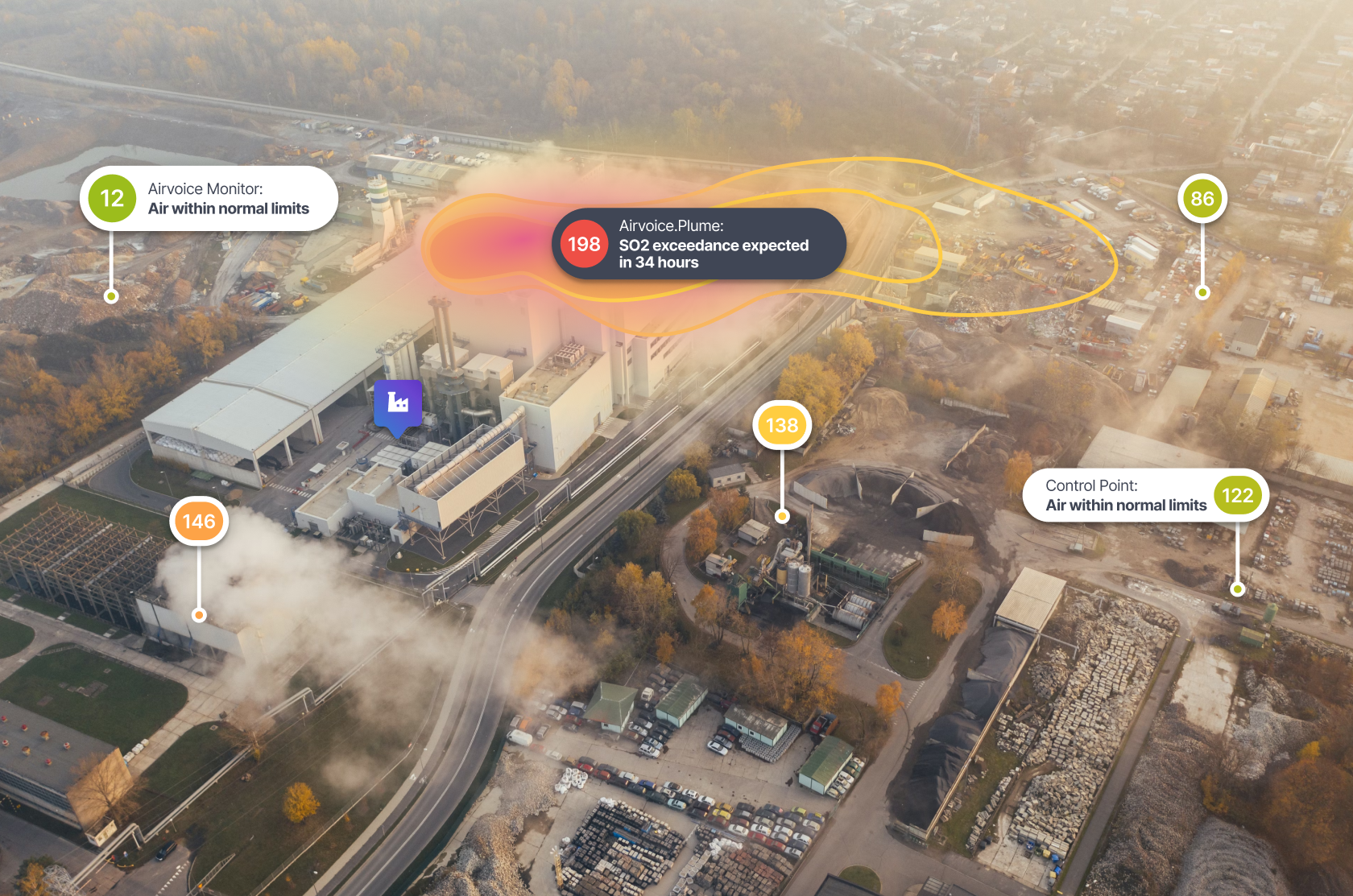
Airvoice.Plume creates a dynamic atmospheric digital twin that shows how emissions may move in the next minutes and hours, using detailed data on wind, temperature, terrain, land cover, and source characteristics.
Here is an example of what it looks like:
Airvoice.Plume creates a dynamic atmospheric digital twin that shows how emissions may move in the next minutes and hours, using detailed data on wind, temperature, terrain, land cover, and source characteristics.
Here is an example of what it looks like:
In the example, you see puffs of smoke released from two sources and how pollution levels change at specific points in the surrounding area. With Plume, you can trace how the smoke bends, rises, and spreads. You can even switch between height layers to understand concentrations at, for example, 10 meters versus 30 meters above ground.
This is how immissions become visible.
Our Head of Research, Dmitri Chubarov, explains it this way:
This is how immissions become visible.
Our Head of Research, Dmitri Chubarov, explains it this way:
For sectors like metallurgy, bulk haulage, energy generation, or even livestock farms dealing with odor dispersion, the real impact depends heavily on atmospheric conditions. Emissions alone don’t tell the whole story. Immissions do. Plume helps teams see the difference in advance.
Real-World Applications
This proves true across very different operations:
Coal Loading Terminal
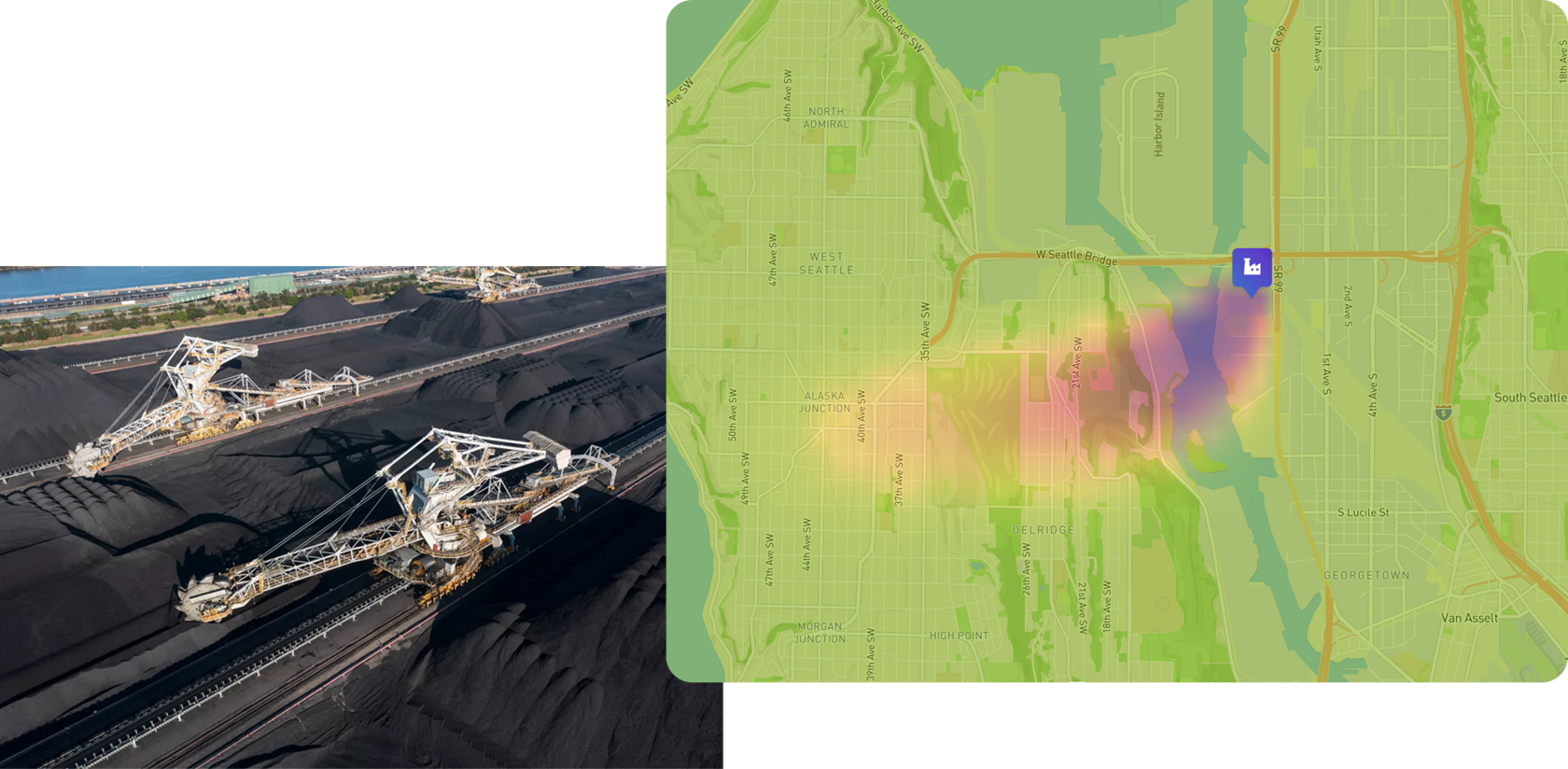
A stevedore operator used Plume to understand how coal dust blown away from stockpiles and released from stacker operations behaves in severe winter conditions. With this insight, they could adjust suppression strategies, maintain operations during challenging weather, and communicate more transparently with the community.
Read the case study>
Read the case study>
Metallurgy & Mining
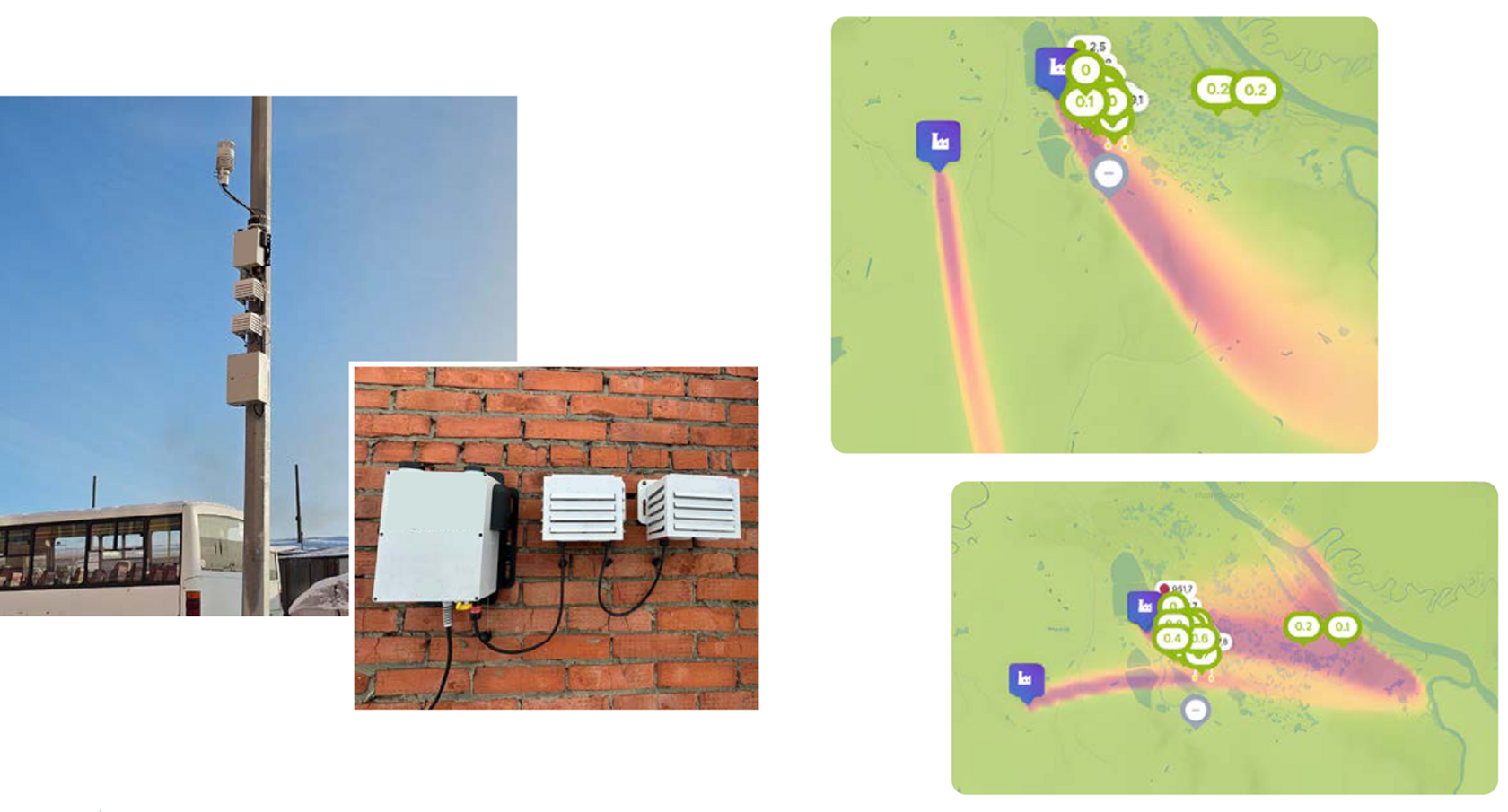
A large copper smelting company used Plume to forecast dispersion patterns around its site. Real-time insight helped improve mitigation decisions and strengthened engagement with regulators and the public.
See the full case>
See the full case>
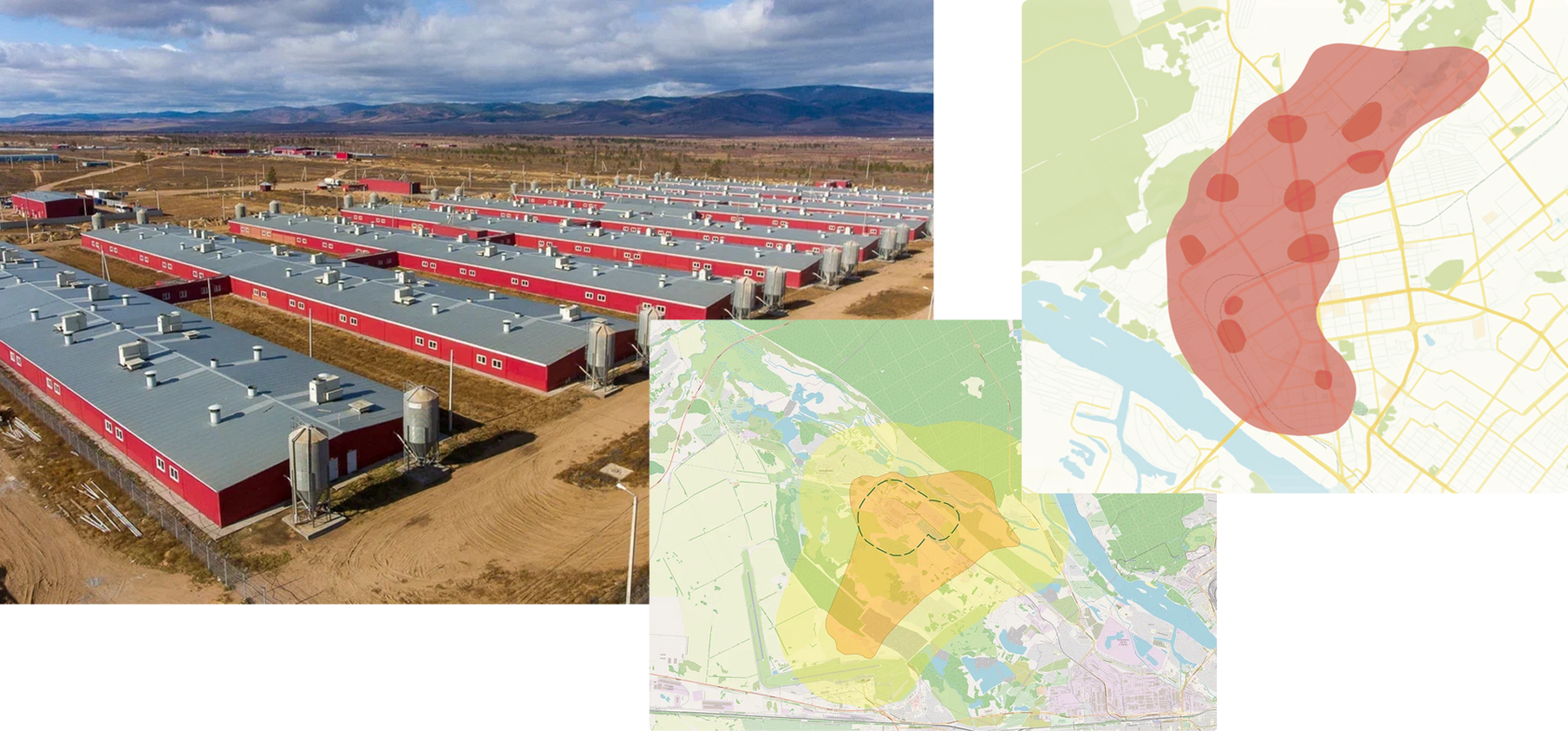
Livestock & Odor Management
A regional livestock enterprise used Plume to analyze how odors travel toward nearby districts. Understanding dispersion patterns helped them substantiate their response to residents’ concerns.
Learn more>
Learn more>
Want to See Plume in Action?
Plume integrates into the broader Airvoice ecosystem, including the Airvoice Ambient Air Quality Platform, compact ambient monitoring systems, and other modeling tools. This allows teams to compare modeled and measured data, validate and refine simulations, analyze historical patterns, identify potential unrecognized sources, and more.
If your enterprise could benefit from this level of visibility, you can explore the product or request a demo.
Learn more about Airvoice.Plume
If your enterprise could benefit from this level of visibility, you can explore the product or request a demo.
Learn more about Airvoice.Plume
Company News
Airvoice at IGBC Green Building Congress 2025
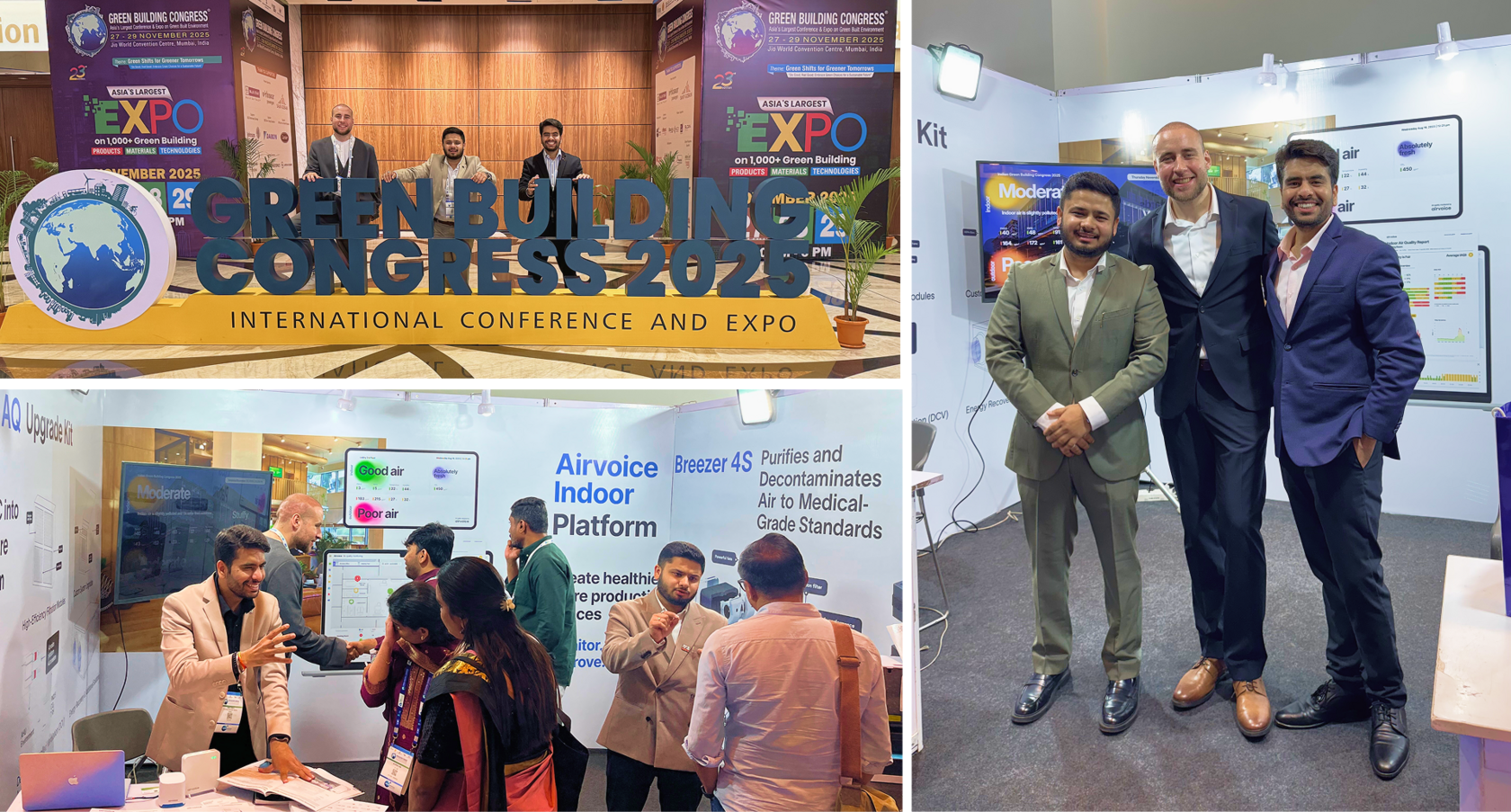
Airvoice exhibited at the IGBC Green Building Congress 2025 in Mumbai, Asia's largest conference on green and net-zero buildings.
People who stopped by weren't just curious. They understood air quality, asked specific technical questions, and pushed conversations deeper than usual.
The Airvoice team presented solutions for indoor air quality monitoring, ventilation optimization, and data-driven building performance. Conversations centered on moving beyond basic ventilation to real-time monitoring, data transparency, and energy-efficient HVAC operation. Many focused on pilot projects in Mumbai, early-stage partnerships, and practical implementation challenges.
As COO Aleksandr Nalivkin put it, "Air quality is definitely a part of next-generation buildings."
The Congress confirmed what our case studies have shown: companies are moving from awareness to action.
People who stopped by weren't just curious. They understood air quality, asked specific technical questions, and pushed conversations deeper than usual.
The Airvoice team presented solutions for indoor air quality monitoring, ventilation optimization, and data-driven building performance. Conversations centered on moving beyond basic ventilation to real-time monitoring, data transparency, and energy-efficient HVAC operation. Many focused on pilot projects in Mumbai, early-stage partnerships, and practical implementation challenges.
As COO Aleksandr Nalivkin put it, "Air quality is definitely a part of next-generation buildings."
The Congress confirmed what our case studies have shown: companies are moving from awareness to action.
Airvoice Presents Research at WeBIOPATR 2025
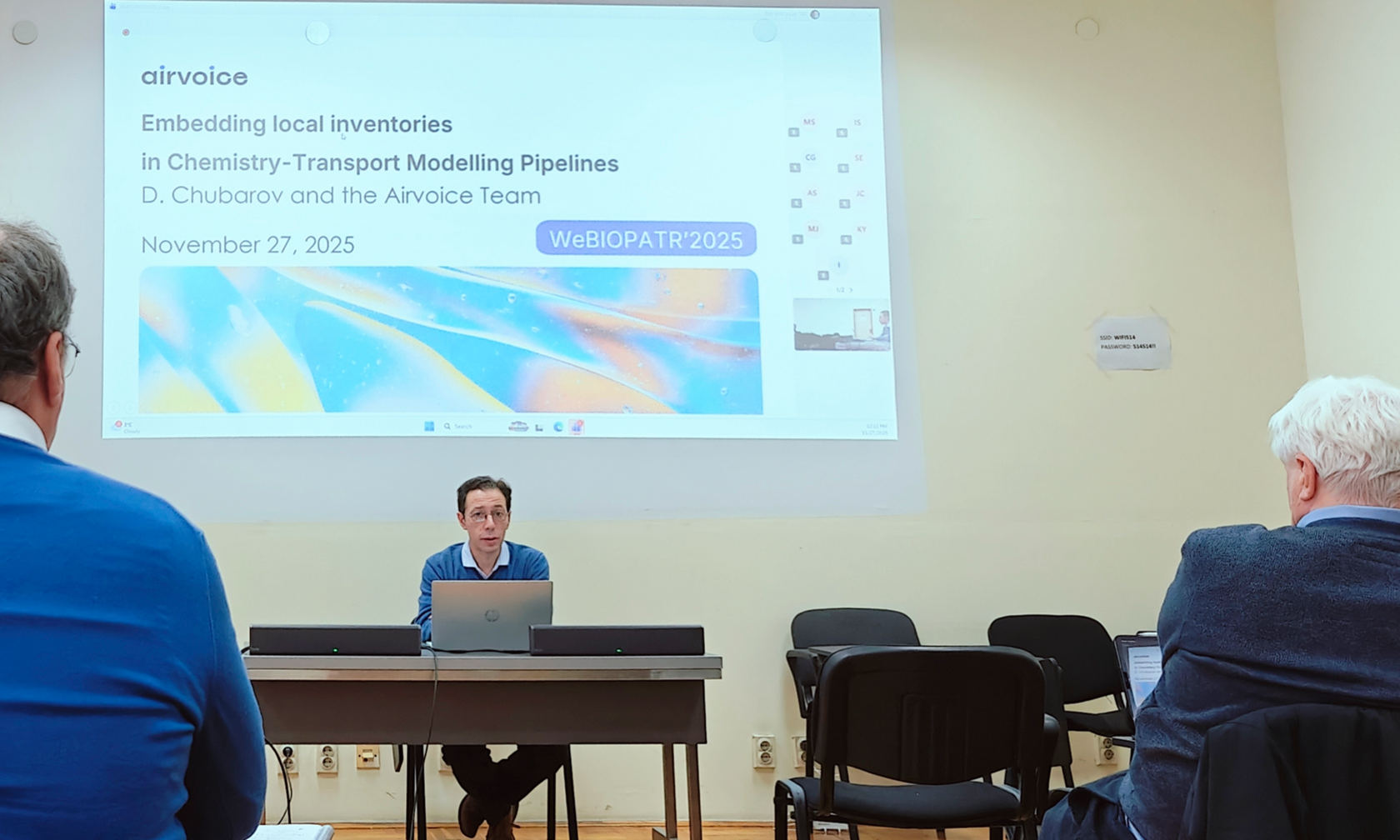
Dmitri Chubarov, Airvoice Head of Research, presented findings at the 10th International WeBIOPATR Conference in Belgrade. His paper addressed a practical challenge: how to improve regional air quality forecasting by using city-specific emission data instead of relying only on global databases.
The preliminary results were promising. After including the local emission inventory for road transport, the model showed higher variability between locations within the city, matching ground observations more closely. PM2.5 forecast accuracy also improved.
The work was carried out within the CII "Clean Air Better Life" initiative. WeBIOPATR, organized by Serbia's Vinca Institute and NILU (Norwegian Institute for Air Research), has served as a platform for atmospheric particulate matter research since 2007.
Read the full story on our website >
The preliminary results were promising. After including the local emission inventory for road transport, the model showed higher variability between locations within the city, matching ground observations more closely. PM2.5 forecast accuracy also improved.
The work was carried out within the CII "Clean Air Better Life" initiative. WeBIOPATR, organized by Serbia's Vinca Institute and NILU (Norwegian Institute for Air Research), has served as a platform for atmospheric particulate matter research since 2007.
Read the full story on our website >
If you’d like to keep up with our latest case tudies, product launches, and air quality insights, subscribe to our Newsletter. It arrives no more than once every two weeks.
Breathe the difference,
The Airvoice Team
We design software and hardware solutions for monitoring and managing air quality in buildings, industries, and cities, and partner with leading universities worldwide on cutting-edge research.
Breathe the difference,
The Airvoice Team
We design software and hardware solutions for monitoring and managing air quality in buildings, industries, and cities, and partner with leading universities worldwide on cutting-edge research.
Europe: hello@airvoice.global | +359 87 911 36 16
India: namaste@airvoice.global | +91 9205 373 365
USA: hello@airvoice.global | +1 857 639 00 81
India: namaste@airvoice.global | +91 9205 373 365
USA: hello@airvoice.global | +1 857 639 00 81