
A major stevedore company operating a coal transloading terminal deployed Airvoice's air quality monitoring network and dispersion modeling tools to manage dust emissions during extreme weather conditions. The system revealed that the company's contribution to regional air pollution had been significantly overstated. At the same time, it enabled data-driven operational decisions and transparent communication with regulatory authorities and the local community.
The Challenge
The stevedore company maintained rigorous dust suppression protocols, including high-pressure water misting systems and semi-sphere shelters over coal conveyors. Despite these preventive measures, an incident during winter 2021's extremely low temperatures revealed a critical vulnerability. Coal dust suppression additives lost their effectiveness during transportation in severe cold, resulting in visible dust clouds observed by residents of a nearby settlement.
The company responded immediately by reducing coal handling volumes during periods of extreme cold. However, a more effective solution was needed that could predict dust plume dispersion under varying weather conditions, optimize terminal operations without unnecessary volume reductions, and objectively determine the company's actual contribution to air quality in a region where several coal transloading terminals operate.
The company responded immediately by reducing coal handling volumes during periods of extreme cold. However, a more effective solution was needed that could predict dust plume dispersion under varying weather conditions, optimize terminal operations without unnecessary volume reductions, and objectively determine the company's actual contribution to air quality in a region where several coal transloading terminals operate.
The Solution
Airvoice deployed a continuous air quality monitoring network of 11 monitors positioned across the coal transloading terminal, nearby settlement, and surrounding areas. The monitors measure PM10 and PM2.5 particulate matter, along with CO, NO2, and O3 concentrations and weather parameters.
The implementation involved three technical adaptations tailored to the terminal's specific operational requirements:
Integration with Industrial Equipment
Airvoice's ambient air quality monitors provide accurate measurements at pollution values close to zero but are not designed for pollution-intensive industrial zones where concentrations exceed standard measurement ranges. To quantify the high dust concentrations at the coal loading area, Airvoice engineers worked with the stevedore's team to integrate a Sintrol Dumo Pro industrial dust meter. This meter can detect particulate levels exceeding 10 mg per square meter. The successful integration shows how Airvoice solutions can work with third-party equipment to create complete monitoring systems.
Remote Monitoring Capability
One monitor required installation in a remote location without power access. Within two months, Airvoice's engineering team designed a solar-powered monitor model with a solar panel, power conversion unit, and storage battery. This development expanded the network's coverage to hard-to-reach locations operating under severe environmental conditions.
Predictive Dispersion Modeling
Airvoice.Plume uses mathematical dispersion modeling to calculate plume trajectory and provide detailed forecasts for up to 24 hours. The model considers emission source types, dust suppression equipment effectiveness, and multiple operational factors specific to the terminal. The system evaluates possible emission consequences, analyzes historical dispersion patterns, and compares simulation results with actual measurement data. This allows operators to make informed decisions before weather conditions create dust management challenges.
The implementation involved three technical adaptations tailored to the terminal's specific operational requirements:
Integration with Industrial Equipment
Airvoice's ambient air quality monitors provide accurate measurements at pollution values close to zero but are not designed for pollution-intensive industrial zones where concentrations exceed standard measurement ranges. To quantify the high dust concentrations at the coal loading area, Airvoice engineers worked with the stevedore's team to integrate a Sintrol Dumo Pro industrial dust meter. This meter can detect particulate levels exceeding 10 mg per square meter. The successful integration shows how Airvoice solutions can work with third-party equipment to create complete monitoring systems.
Remote Monitoring Capability
One monitor required installation in a remote location without power access. Within two months, Airvoice's engineering team designed a solar-powered monitor model with a solar panel, power conversion unit, and storage battery. This development expanded the network's coverage to hard-to-reach locations operating under severe environmental conditions.
Predictive Dispersion Modeling
Airvoice.Plume uses mathematical dispersion modeling to calculate plume trajectory and provide detailed forecasts for up to 24 hours. The model considers emission source types, dust suppression equipment effectiveness, and multiple operational factors specific to the terminal. The system evaluates possible emission consequences, analyzes historical dispersion patterns, and compares simulation results with actual measurement data. This allows operators to make informed decisions before weather conditions create dust management challenges.
The Results
Objective Assessment of Environmental Impact
Measurement results from the first months of operation revealed that the stevedore's contribution to regional air pollution had been overstated. Among the 11 monitors, only one (installed at the coal unloading point) systematically showed elevated pollution levels. This data provided objective evidence for responding to inquiries from authorities, regulatory bodies, and the public regarding the company's environmental impact.
Proactive Air Quality Management
The combination of real-time monitoring data and dispersion modeling enabled preventive operational decisions to reduce dust dispersion and limit it to the sanitary protection zone, stopping emissions before they could impact surrounding communities.
Enhanced Transparency and Public Trust
By providing public access to air quality data, the company demonstrated environmental responsibility and kept residents and authorities informed about conditions and mitigation measures. This transparency strengthened the company's reputation as an environmentally responsible operator.
Compliance Readiness
The sanitary protection zone undergoes regular inspection by competent authorities. The company's own monitoring network ensures continuous compliance readiness, enabling immediate response to any regulatory inquiries with comprehensive, verifiable data.
Measurement results from the first months of operation revealed that the stevedore's contribution to regional air pollution had been overstated. Among the 11 monitors, only one (installed at the coal unloading point) systematically showed elevated pollution levels. This data provided objective evidence for responding to inquiries from authorities, regulatory bodies, and the public regarding the company's environmental impact.
Proactive Air Quality Management
The combination of real-time monitoring data and dispersion modeling enabled preventive operational decisions to reduce dust dispersion and limit it to the sanitary protection zone, stopping emissions before they could impact surrounding communities.
Enhanced Transparency and Public Trust
By providing public access to air quality data, the company demonstrated environmental responsibility and kept residents and authorities informed about conditions and mitigation measures. This transparency strengthened the company's reputation as an environmentally responsible operator.
Compliance Readiness
The sanitary protection zone undergoes regular inspection by competent authorities. The company's own monitoring network ensures continuous compliance readiness, enabling immediate response to any regulatory inquiries with comprehensive, verifiable data.
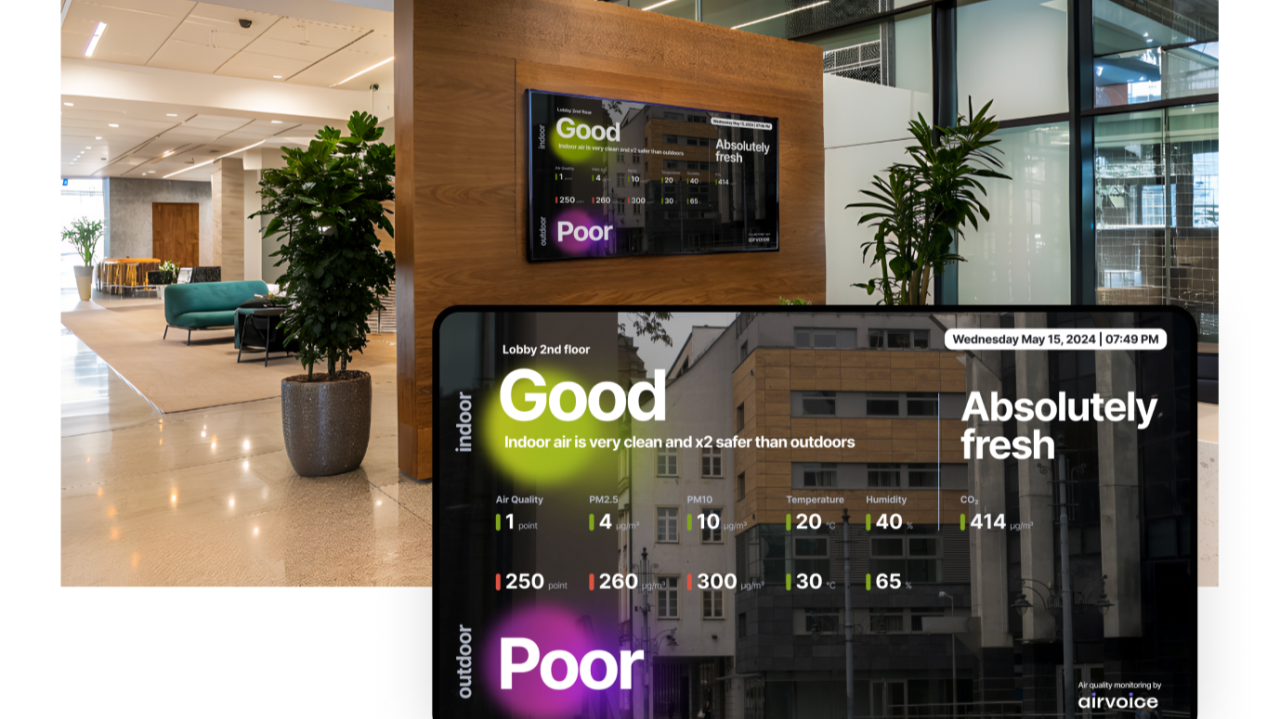
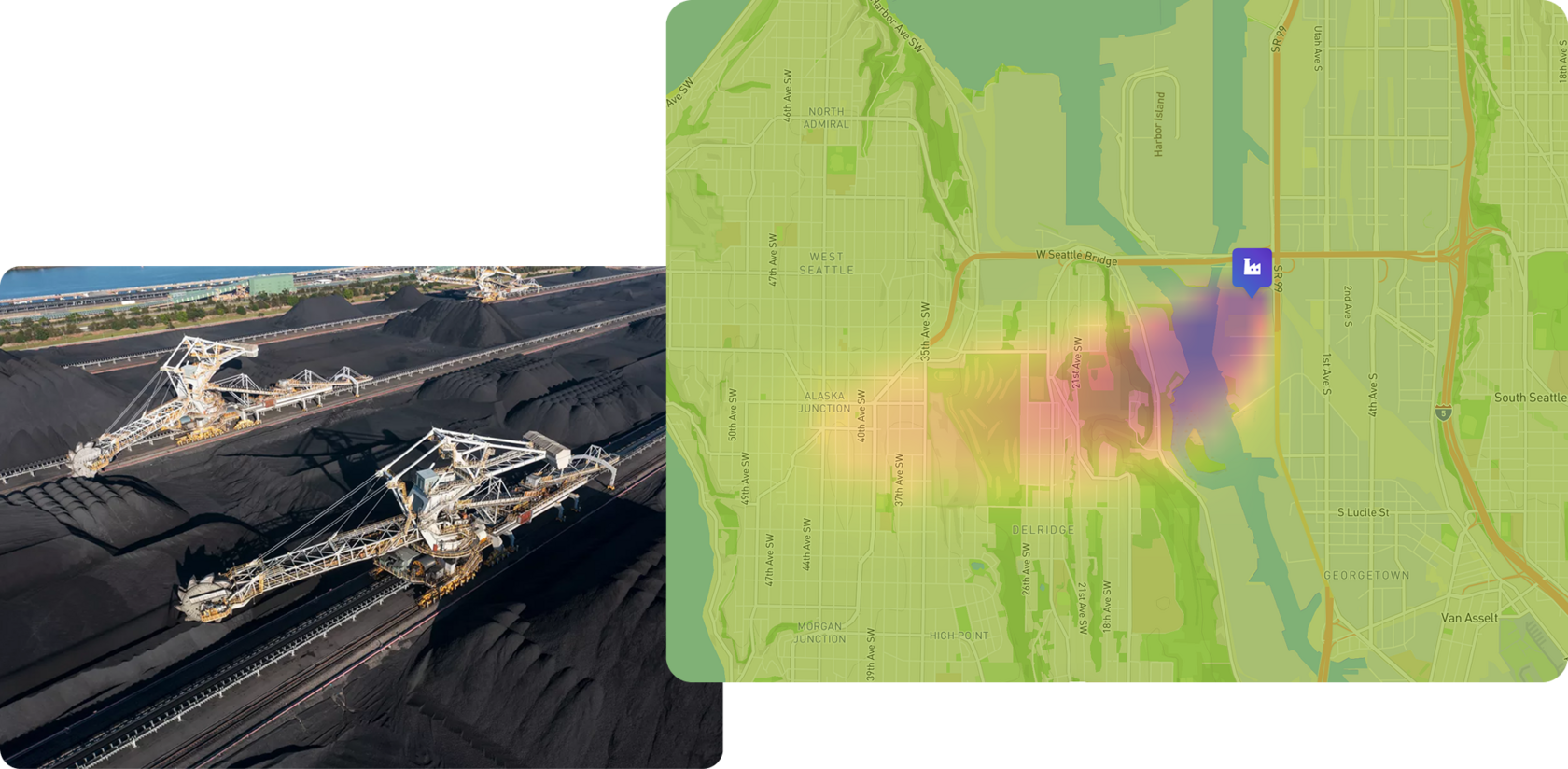
* Due to confidentiality agreements, specific project details are not disclosed. All photos and screenshots are for illustrative purposes only and do not depict the actual site or data.
Related Products
Airvoice.Plume — your atmospheric digital twin to forecast the dispersion of air pollutants from industrial or urban sources under dynamic atmospheric conditions. By combining emission data with high-resolution weather, topography, and land cover inputs, the software helps anticipate air quality risks and adjust operations to reduce community exposure.
Learn more>
Airvoice Ambient Air Quality Monitoring Platform — a software system that consolidates air quality data from sensors and models into a single, user-friendly interface. It offers real-time and historical data analysis, sensor network management, configurable alerts, and report generation, enabling city authorities and industrial managers to respond effectively to incidents, analyze trends, and incorporate air quality data into operational and strategic planning.
Learn more>
Airvoice Ambient Air Quality Monitoring System — an air quality monitor that combines high measurement accuracy with compact, cost-effective design for scalable networks. The system measures PM2.5, PM10, temperature, humidity, and atmospheric pressure, with gas sensors integrated through the Airvoice Hub to track H₂S, CO, NO₂, O₃, SO₂, and other gases as needed.
Learn more>
Learn more>
Airvoice Ambient Air Quality Monitoring Platform — a software system that consolidates air quality data from sensors and models into a single, user-friendly interface. It offers real-time and historical data analysis, sensor network management, configurable alerts, and report generation, enabling city authorities and industrial managers to respond effectively to incidents, analyze trends, and incorporate air quality data into operational and strategic planning.
Learn more>
Airvoice Ambient Air Quality Monitoring System — an air quality monitor that combines high measurement accuracy with compact, cost-effective design for scalable networks. The system measures PM2.5, PM10, temperature, humidity, and atmospheric pressure, with gas sensors integrated through the Airvoice Hub to track H₂S, CO, NO₂, O₃, SO₂, and other gases as needed.
Learn more>
If you’d like to keep up with our latest case studies, product launches, and air quality insights, subscribe to our Newsletter. It arrives no more than once every two weeks.